|
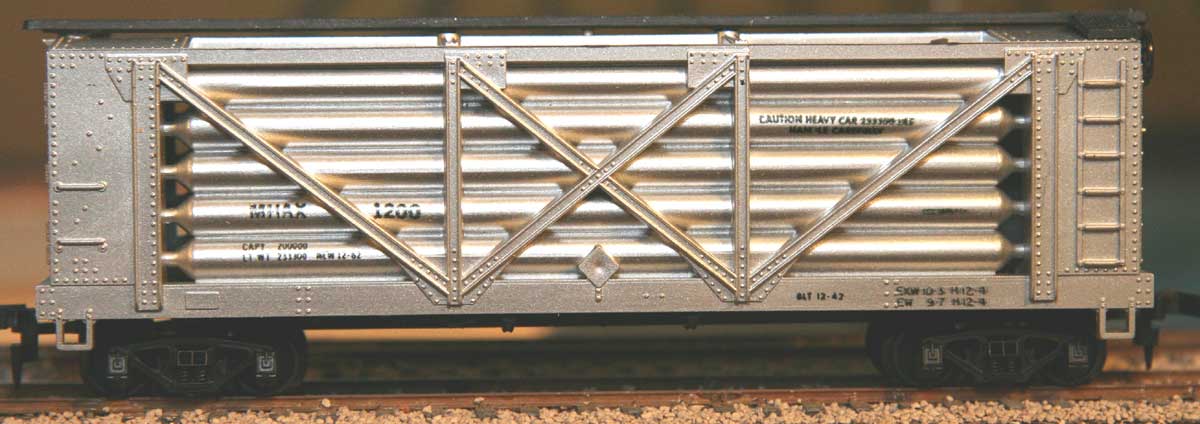
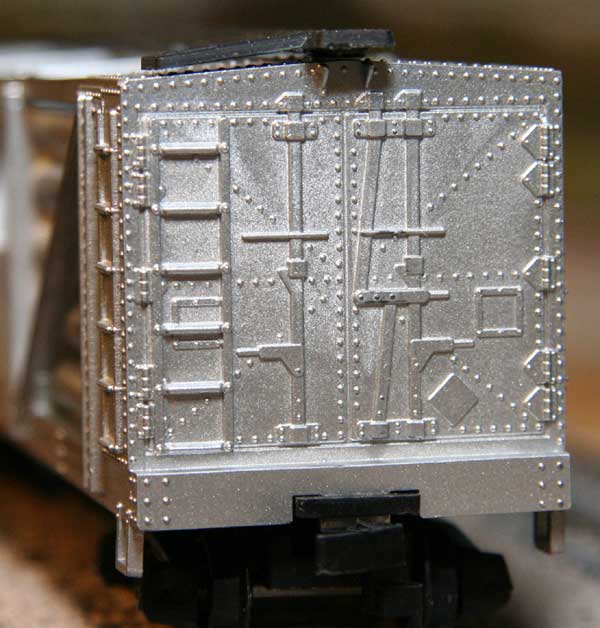
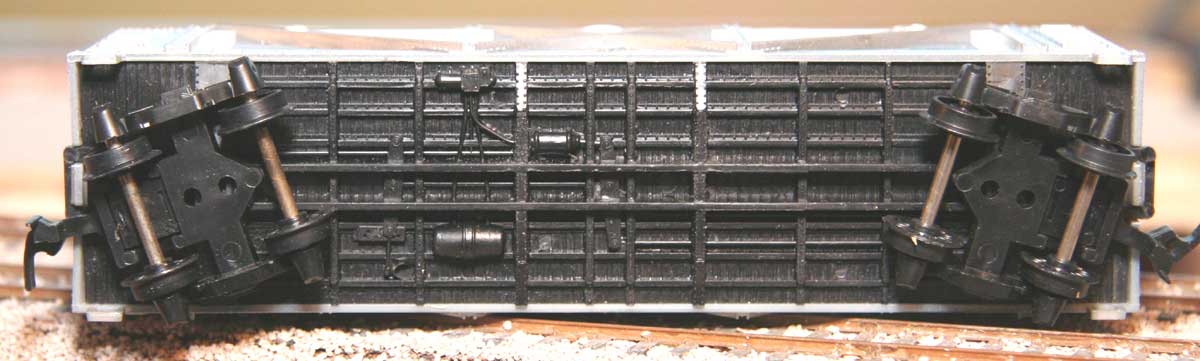
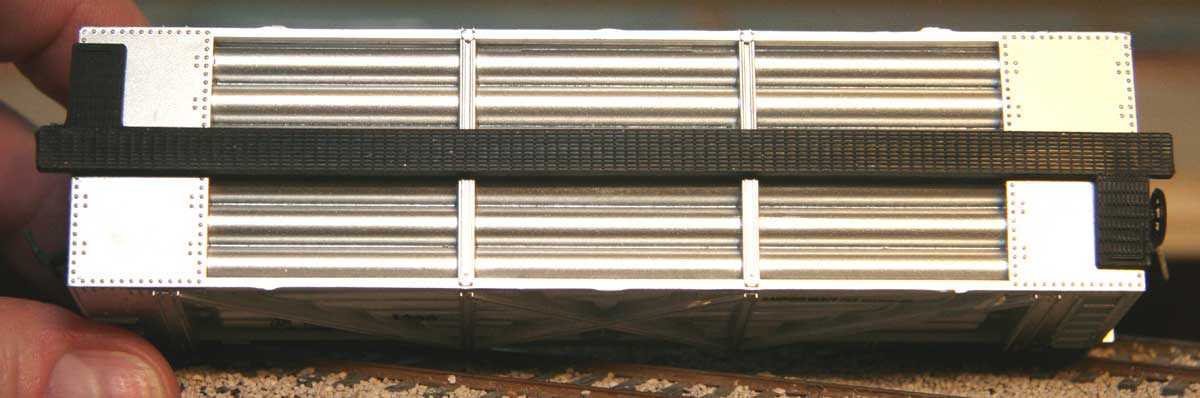
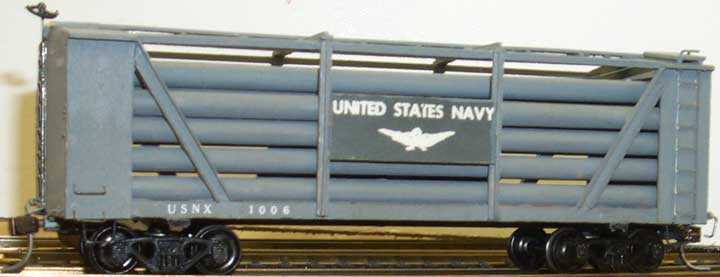
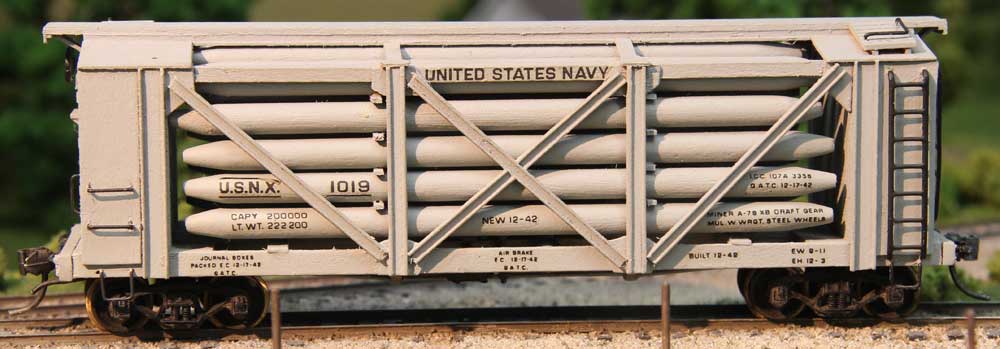
AHM Helium Car 5423 C Dept. of Mines Updated 8-7-12
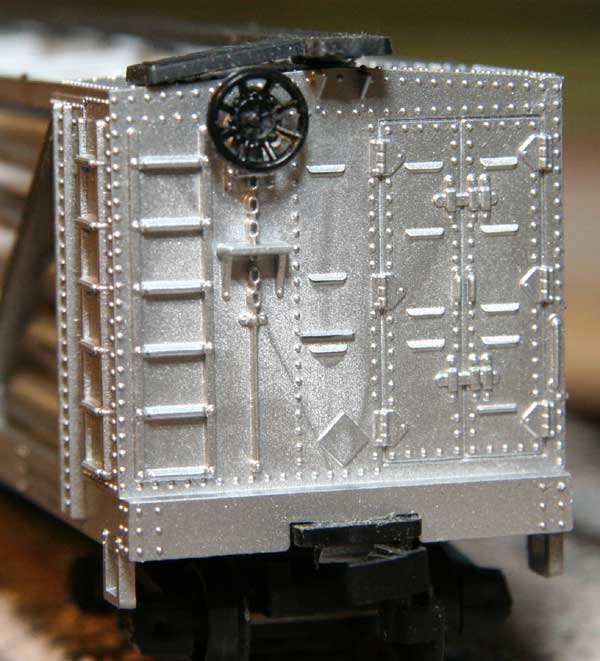
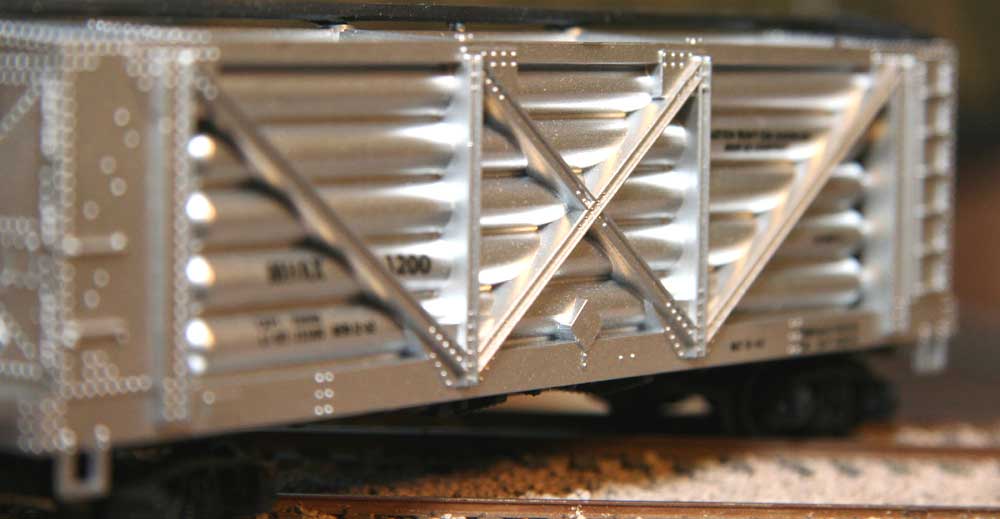
Many years ago AHM produced a plastic model of the helium tank cars that were found on the ATSF. Jay Miller reports: "Both the AHM and the Ambroid helium car kit are, at best, "holding pattern" cars until the real thing arrives. "The Pecos River Brass car is a late design (1961) Magor car and not suitable for 1940-1950 era modelers. "A very abbreviated history of the cars is as follows: "One experimental car had three tanks-- 1001 circa 1929. (Lionel did a crude HO model of this car.) The first 10 production cars were built by GATX (ca. 1930) and had 28 tanks. Subsequent orders through 1962 were built by ACF and Magor with 30 tanks. Car were rebuilt during their careers. There were 8 generations of of cars, so even though they looked much alike, there were differences. "In 1943 there were 76 cars and all were marked USNX and painted Navy gray. This continued through WWII and up through June 1955 with a typical roster of 85 cars. "After July 1955 the fleet was parsed between the Bureau of Mines and the US Atomic Energy Commission. Some new cars were ordered and some were lettered ATMX for the AEC. The remainder of the fleet were re-lettered MHAX for the Bureau of Mines. At this time, we suggest that the color was changed from Navy gray to silver. The Navy went out of the lighter than air business with the last flight of an airship in 1962. In 1962, nearly 200 helium cars were in operation. "By the 1980s the cars were all lettered MHAX. In 1996 the federal government went out of the helium business and the cars headed for scrap. "The cars were all based in the Amarillo area and loaded from production plants at Amarillo, Exell and Keys, Oklahoma. The natural gas in the enormous Panhandle field has the highest concentration of helium gas, hence the location of the Bureau of Mines Helium Operations Center. " "For 1951, the cars would be gray and the lettering black and
all would be lettered USNX." Jay Reports recently (2007) discovering a wealth of material on these cars and promises an update in the near future. Jay produced a handout for the 2007 Santa Fe Convention. Click here to download it. The Amarillo Plant was on the Rock Island. Alain Kap has provided decals masters for HO users.
Jerry Glow has also produced decals. Prototype
photos taken in Amarillo, 2006, and model photos by Steve Sandifer. There is one
car at the Amarillo Railroad
Museum (1242, orig 1021, ACF 1955), another at the Gulf
Coast Railroad Museum (1237, ACF 1955) in Houston, another at the Gold
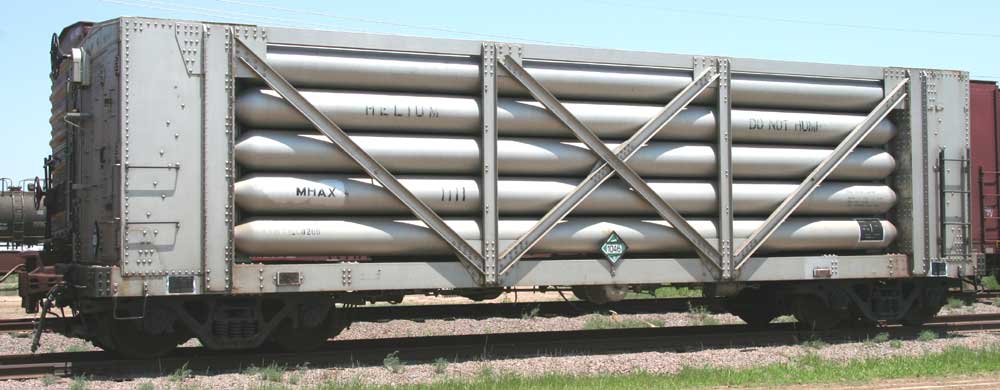
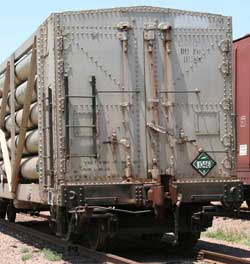
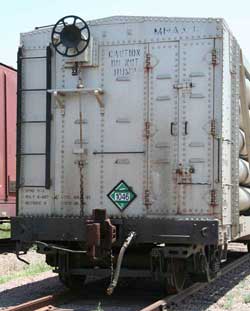
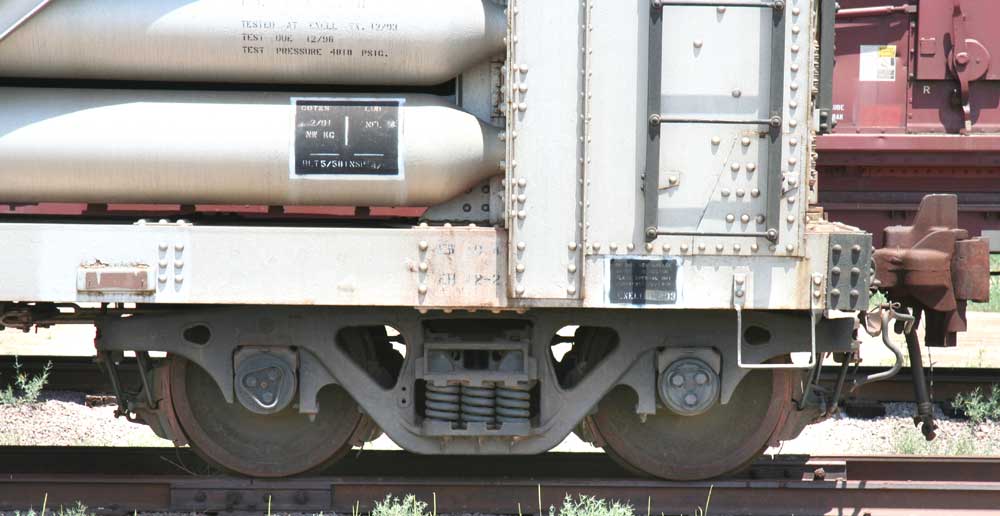
Coast Museum (1202, Magor 1962) in Miami. The photos below were taken in a yard in Amarillo of the 1111, ACF 1958.
|